Good Authority
Good Authority’s mission is to bring insights from political science to a broader audience. Here, political scientists draw on their expertise to provide in-depth analysis, illuminate the news, and inform the political conversation.
Listen on:






Episodes

7 days ago
7 days ago
In this episode of Chalkboard Politics, the team explores the evolving challenges facing international institutions in a period of populist backlash and shifting global power. In the first conversation, professors Allison Carnegie and Richard Clark discuss how international organizations – from the European Union to the IMF and WTO – navigate growing populist resistance, funding withdrawals, and declining hegemonic support. They explain how institutions respond strategically, sometimes appeasing critics, sometimes quietly working around them, while increasingly seeking new coalitions and sources of legitimacy.
The episode then turns to an interview with Professor Anjali Dayal, who examines the changing role of the United Nations in peacekeeping, humanitarian coordination, and global governance. Dayal traces how U.N. peacekeeping missions have evolved from neutral observers between countries to complex operations dealing with civil wars, counterterrorism, and regime stabilization. The conversation also explores the consequences of declining U.S. commitment to international institutions, Security Council gridlock, and growing tensions around international law.
Together, this podcast episode considers whether international institutions can adapt to populist pressure and declining hegemonic leadership, or whether the global order is entering a more fragmented and uncertain era.
Episode’s Main Themes:
Populism and Institutional Pushback: Populist leaders increasingly challenge international organizations through funding withdrawals, rhetorical attacks, and institutional obstruction. Carnegie and Clark emphasize that these pressures are not entirely new, but they are reshaping how institutions operate and defend their legitimacy. Key terms: populism, institutional legitimacy, multilateralism
How International Organizations Adapt: International institutions are strategic actors that can respond to political pressure by appeasing critics, working around populist leaders, or finding alternative funding sources. Examples include states creating alternative dispute mechanisms like the Multi-Party Interim Appeal Arbitration Arrangement (MPIA) to preserve WTO dispute resolution functions. Key terms: institutional adaptation, strategic behavior, dispute resolution
Shifts in Global Leadership: Declining U.S. support for multilateralism raises questions about whether middle powers or rising states can fill leadership gaps in global governance. Countries like Canada and China have increased contributions in certain areas, though institutional rules and consensus requirements often limit collective action. Key terms: hegemonic decline, middle powers, global governance
The Changing Role of UN Peacekeeping: UN peacekeeping has evolved from monitoring ceasefires between states to complex missions that include civilian protection and state stabilization. While peacekeeping operations often help reduce violence, their success depends heavily on whether underlying political conflicts have been resolved. Key terms: peacekeeping, civil wars, civilian protection
The Human Stakes of Multilateral Withdrawal: When major powers reduce funding or political support for international institutions, vulnerable populations—such as refugees and those dependent on humanitarian assistance—often bear the greatest costs. Funding cuts can disrupt health programs, food aid, and long-standing humanitarian partnerships. Key terms: humanitarian aid, development assistance, global health
The Future of Multilateral Order: Growing Security Council gridlock and declining respect for international law raise concerns about the durability of the post-1945 international system. Dayal suggests that coalitions of smaller and middle powers may play an increasingly important role in sustaining multilateral institutions. Key terms: international law, Security Council veto, multilateralism
Suggested Reading:
Carnegie, Allison, and Richard Clark. Global Governance Under Fire: How International Organizations Resist the Populist Wave. Princeton: Princeton University Press, 2026.
Carnegie, Allison and Austin Carson. Secrets in Global Governance: Disclosure Dilemmas and the Challenge of International Cooperation. Cambridge: Cambridge University Press, 2020.
Clark, Richard. Cooperative Complexity: The Next Level of Global Economic Governance. Cambridge: Cambridge University Press, 2025.
Dayal, Anjali V. Incredible Commitments: How UN Peacekeeping Failures Shape Peace Processes. Cambridge: Cambridge University Press, 2021.
Dayal, Anjali K., and Natalie Samarasinghe. “Can the United Nations Prevent Wars?” Doha Debates Podcast, hosted by Joshua Johnson. Season 1, Episode 18. January 9, 2024. Doha Debates and FP Studios.
Follow the Chalkboard Politics Podcast:
This episode of Chalkboard Politics comes to you via the Good Authority podcast feed. Listen, rate, and subscribe to the Good Authority Podcast. The Good Authority podcast is available on Apple Podcasts, Spotify, Podcast Addict, and wherever you listen to podcasts. You can also follow Chalkboard Politics on Instagram and Bluesky.
Contact the Chalkboard Politics Team: If you have any comments or questions about today’s episode, or ideas for future segments, please email us at chalkboardpolitics@columbia.edu.

Thursday Feb 12, 2026
Thursday Feb 12, 2026
In this episode, Paul and Gulnaz sit down with Professor Jeffry Frieden, author of Global Capitalism: Its Fall and Rise in the Twentieth Century, to unpack what tariffs are, how they work, and their role in U.S. policy and abroad. Frieden describes how tariffs are some of the oldest tools of statecraft, tracing their history of domestic impacts through the British Corn Laws and showing how they raise prices for consumers while protecting favored producers. The conversation addresses the Trump administration’s expansive use of tariffs, operating not just as economic policy tools, but as instruments of foreign policy, bargaining, and national security. Overall, this episode asks whether Trump’s tariffs will ultimately decenter the U.S. in the global economy, and what a potential re-ordering could look like.
Episode’s Main Themes:
Tariffs as Economic and Political Power
Tariffs are tools that redistribute costs and benefits within societies, project power internationally, and shape domestic politics and foreign relations.
Key terms: domestic industry protection, import/export, geoeconomics
The Break from the Postwar Trade Order
The Trump administration’s tariff policy is a sharp departure from long-standing economic norms, including multilateralism and Most Favored Nation (MFN) rules that have structured global trade since 1945.
Key terms: MFN, multilateralism, “Liberation Day,” international institutions, trade diversion
Domestic Costs and Global Consequences
While tariffs are often framed as protecting national interests, their costs are largely borne by domestic consumers and firms.
Abroad, tariffs motivate trade diversion, uncertainty, and new alliances that bypass the United States.
Key terms: Consumers, producers, free trade, protectionism, trade agreements
An Uncertain Transition in Global Leadership
Current trade conflicts are part of a larger shift away from the U.S.-led economic integration.
This move towards retrenchment by the U.S. raises the question of whether the world is moving toward a reordered system or risking instability and fragmentation.
Key terms: Global order, great power competition, isolationism, trade wars
Suggested Reading:
Acemoglu, D., & Robinson, J. A. (2012). Why Nations Fail: The Origins of Power, Prosperity, and Poverty. Crown Publishers. ISBN: 0307719219.
Frieden, Jeffry. (2020). Global Capitalism: Its Fall and Rise in the Twentieth Century. W. W. Norton & Company. ISBN: 1324004207.
Engerman, S. L., & Sokoloff, K. L. (2011). Economic Development in the Americas since 1500: Endowments and Institutions. Cambridge University Press. ISBN: 9781107009554.
Follow the Chalkboard Politics Podcast:
This episode of Chalkboard Politics comes to you via the Good Authority podcast feed. Listen, rate, and subscribe to the Good Authority Podcast. The Good Authority podcast is available on Apple Podcasts, Spotify, Podcast Addict, and wherever you listen to podcasts. You can also follow Chalkboard Politics on Instagram and Bluesky.
Contact the Chalkboard Politics Team:
If you have any comments or questions about today’s episode, or ideas for future segments, please email us at chalkboardpolitics@columbia.edu.

Wednesday Jan 21, 2026
Wednesday Jan 21, 2026
The second Trump administration has aggressively disrupted climate policy and politics, both domestically and internationally. Trump has prioritized domestic oil and coal interests, gutting the Biden administration’s main climate policy and withdrawing permits for major wind and solar projects. In recent weeks, he has withdrawn the United States from several major international climate institutions – and some argue that he has used oil as an explicit motivation for using force in Venezuela.
To discuss what all of this means for the ongoing global effort to combat climate change, I spoke with two experts who have written extensively about energy and climate politics. Jeff D. Colgan is the Richard Holbrooke Professor in the Department of Political Science and the Watson School at Brown University. He is also the founding director of the Climate Solutions Lab. He recently contributed a piece on Venezuela for Good Authority. Federica Genovese is professor of political science and international relations at the University of Oxford and a recent winner of the prestigious Philip Leverhulme Prize.
Our conversation was based in part on a short open access article that Jeff and Federica wrote for International Organization on “Global Climate Politics after the Return of Trump.” We talked about both the domestic and international implications of the Trump administration’s actions for climate change.
You can also subscribe to our podcast on Apple Podcasts.

Tuesday Jan 20, 2026
Tuesday Jan 20, 2026
In this episode of Chalkboard Politics, students sit down with Professors Eduardo Moncada, Sarah Daly, and Elizabeth Saunders to unpack how concepts like narco-terrorism, criminal governance, and credible commitment have, and continue to, shape U.S. policy toward Venezuela. Drawing on the legacy of the War on Drugs, the conversation challenges the argument that militarized intervention or leadership removal can dismantle illicit economies. Instead, our guests explore the relevance and role of patronage systems, the “balloon effect,” and the political incentives behind spectacular uses of force, while asking what all of this means for Venezuelan citizens, democracy, and regional sovereignty, and whether the Trump administration can actually get what it wants.
Episode’s Main Themes and Concepts:
1. Narco-terrorism as a political label
How the term emerged, why it is analytically imprecise when applied to Venezuela, and how it shapes the range of policy responses.
Key terms: narco-terrorism; political labeling; securitization
2. Criminal governance vs. terrorism
Why most cartels and illicit networks lack ideology, and how illicit economies function through governance, corruption, and regime survival rather than political violence.
Key terms: illicit economy; criminal governance; patronage politics
3. Why military intervention is likely to fail
Why military intervention is unlikely to stop drug flows or democratize Venezuela, and how repression often displaces rather than eliminates illicit activity.
Key terms: balloon effect; militarization; credible commitment, principal-agent problem
References and Suggested Reading:
References:
Andreas, Peter. 2022. Border Games: The Politics of Policing the U.S.-Mexico Divide. Ithaca, NY: Cornell University Press.
Berman, Eli, and David A. Lake, eds. 2019. Proxy Wars: Suppressing Violence through Local Agents. Ithaca, NY: Cornell University Press.
Further Reading:
Andreas, Peter. 2025: The Illicit Global Economy: What Everyone Needs To Know. New York: Oxford University Press.
Daly, Sarah Zukerman. Organized Violence after Civil War: The Geography of Recruitment in Latin America. New York: Cambridge University Press, 2016.
Daly, Sarah Zukerman. Violent Victors: Why Blood-Stained Parties Win Postwar Elections. Princeton, NJ: Princeton University Press, 2022.
Daly, Sarah Zukerman, and Elena Barham. “A Bargaining Theory of Criminal War.” International Studies Quarterly68, no. 3 (2024): sqae083. https://doi.org/10.1093/isq/sqae083.
Moncada, Eduardo. Cities, Business, and the Politics of Urban Violence in Latin America. Stanford, CA: Stanford University Press, 2016.
Moncada, Eduardo. Resisting Extortion: Victims, Criminals, and States in Latin America. Cambridge: Cambridge University Press, 2021.
Follow the Chalkboard Politics Podcast:
This episode of Chalkboard Politics comes to you via the Good Authority podcast feed. Listen, rate, and subscribe to the Good Authority Podcast. The Good Authority podcast is available on Apple Podcasts, Spotify, Podcast Addict, and wherever you listen to podcasts. You can also follow Chalkboard Politics on Instagram and Bluesky.
Contact the Chalkboard Politics Team:
If you have any comments or questions about today’s episode, or ideas for future segments, please email us at chalkboardpolitics@columbia.edu.

Friday Dec 19, 2025
Friday Dec 19, 2025
How will artificial intelligence reshape global power? And what can past technological revolutions tell us about today’s U.S.-China rivalry? In this episode of Good Authority, I spoke with Jeffrey Ding, assistant professor of political science at George Washington University and a leading scholar at the intersection of technology and international politics.
Ding’s award-winning book, Technology and the Rise of Great Powers, argues that technological leadership depends less on breakthrough inventions and more on a country’s ability to diffuse new technologies widely across its economy and society. Drawing on historical cases from Britain, the United States, Germany, and Japan, he shows how diffusion capacity helps determine which countries translate innovations into lasting geopolitical advantage.
The book has drawn a lot of attention, including from leading AI companies like Microsoft, and from politicians, including former British prime minister Rishi Sunak. Our conversation explores what this diffusion-centered perspective means for the current race over AI, how China and the United States compare in their technological ecosystems, and what historical analogies can – and cannot – reveal about the future of global politics. And we tackle the big questions about the real constraints facing governments attempting to harness emerging technologies for national power.
Thursday Nov 20, 2025
Thursday Nov 20, 2025
Stacie Goddard and Abe Newman explain how cliques are ruling the world
The journal International Organization has just published a new online open access edition with short accessible essays written by prominent scholars about the future of international order. One of the more provocative essays is by Good Authority editor and Wellesley College professor Stacie Goddard together with Georgetown professor Abe Newman.
In this new article, Goddard and Newman argue that we may be witnessing the emergence of a neo-royalist world order—one that looks less like the liberal, rules-based system many of us grew up studying, and more like a world dominated by powerful patrons, loyal clients, and informal hierarchies and cliques.
We talk about what they mean by “neo-royalism,” how it connects to debates about U.S. power, China’s rise, and the politics of global interdependence. We also discuss some examples of how this new order works, such as the authorization of the sale of large quantities of advanced Nvidia chips to the UAE and Saudi Arabia and other cases where the interests of the cliques appear to prevail over national security interests. We also discuss royal wannabes, like FIFA President Gianni Infantino, how this new order competes with other orders and whether it is likely to survive beyond Donald Trump’s Presidency.
Sunday Mar 09, 2025
Sunday Mar 09, 2025
The Trump administration’s freeze on foreign aid puts the lifesaving program PEPFAR at risk, halting the distribution of essential HIV/AIDS medications in over 50 countries. Despite an emergency humanitarian waiver, the executive order dismantling the U.S. Agency for International Development (USAID) has created both confusion and life-and-death consequences. Good Authority Editor-in-Chief Kim Yi Dionne reads her February 2025 article, "PEPFAR has saved 25 million lives. Without it, millions will die."
Saturday Feb 08, 2025
Saturday Feb 08, 2025
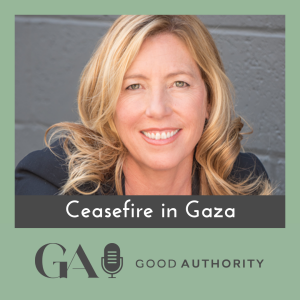
Barbara Walter spoke with Good Authority a year ago about the war in Gaza, drawing from her New York Times bestselling research on how civil wars almost always fight until the end – unless an outside power steps in to guarantee a peace agreement. Now that a ceasefire is in place, she revisits her initial analysis and how domestic political factors are likely to shape what happens next.
Monday Feb 03, 2025
Monday Feb 03, 2025
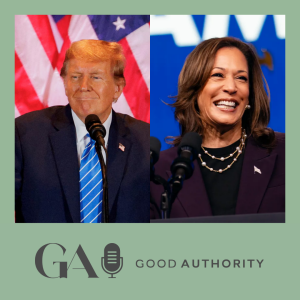
Pundits and scholars were quick to propose reasons for the 2024 presidential election outcome, from the economy to foreign affairs to campaign strategy—but what does the evidence actually say? Good Authority publisher John Sides and political scientist Danny Hayes, both experts on U.S. elections, explore what factors were likely the most decisive. While some questions remain unanswered, they find key points of consensus on what truly shaped the results.
Sunday Jan 26, 2025
Sunday Jan 26, 2025
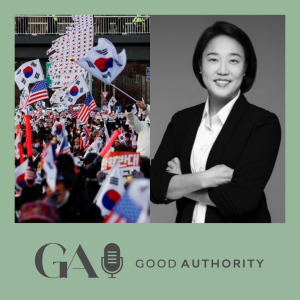
After declaring martial law in December, South Korean President Yoon Suk Yeol has faced impeachment, arrest, and detention on charges of inciting insurrection. Jean Hong, a professor at the University of Michigan who specializes in the political economy of authoritarianism in East Asia, analyzes the implications for democratic consolidation. She discusses public opinion and the emergence of the far right, along with how legal proceedings are likely to evolve.